AAMG Annual Conference
AAMG 2028: The Chazen Museum of Art at University of Wisconsin – Madison in Madison, Wisconsin
AAMG 2029: The Jule Collins Smith Museum of Fine Art at Auburn University in Auburn, Alabama
AAMG 2030: Virtual
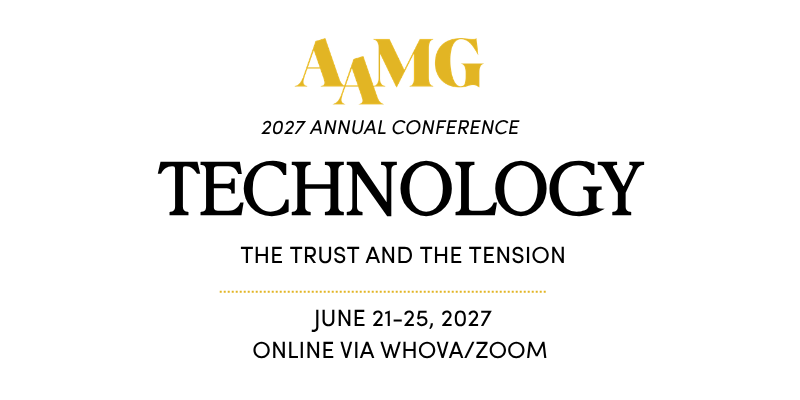
Technology: the Trust and the Tension
Dates: June 21-25, 2027 | Location: Online, Whova/Zoom
The workflows of the 21st century have reached a new level of distinction in the number and introduction of new tools and technologies available to us. Technology (analog, digital, and artificial) exists as tools we use to communicate, curate, organize, research, and produce. In what ways does technology affect our audiences, collections, communications, exhibitions, and workflows?
Our experiences as professionals in academic museums and galleries are being uniquely shaped by the rapid expansion of digital and physical technologies. Amid the dominance of screen cultures, moving images, artificial intelligence, and the internet in general, professionals working in academic museums and galleries remain responsible for the care, stewardship, and accessibility of physical objects and collections. How do we effectively navigate a digital and physical workflow? How has the pressure to develop digital workflows affected our “unseen” or underrecognized labor?
As museums and galleries work to maintain trust among students, faculty, donors, researchers, and community audiences, this year’s AAMG conference committee encourages proposals that imagine or critique collective, creative, and sustainable technological futures. The conference committee welcomes proposals from individuals at all stages of technology adoption and use.
- Museum professionals are taught to be critical of objects, people, and places, but what does it mean to be critical of digital practice (beyond blanket value judgements)?
- How has the pressure to develop digital workflows affected our “unseen” or underrecognized labor? How do we build new skills, integrate new skills, or train staff, students, and faculty?
- How can museums foster trust while adopting new technologies? How do institutions communicate the use of AI transparently? In what ways are college and university AI policies affecting approaches to education, interpretation, and engagement?
- Has technology changed what we see as our responsibility to objects or people? What ethical frameworks guide technological decision-making? How can museums balance innovation with responsibility and accountability?
- Amid constant upgrades to software and the release of new devices, how are academic museums and galleries determining which tools to invest in? How are parent institutions funding and dictating use and access?
- Digitization does not inherently create accessibility. How can academic museums and galleries avoid the “trap” of access? That is, how might decentered spaces, campus-wide collections, and online archives contribute to how information is accessed and utilized?
*You are welcome to submit multiple proposals; however, any one speaker can only participate in up to two presentations throughout the virtual conference.
Proposal Formats May Include:
· session
· panel discussion
· problem solving workshop
· facilitated roundtable
Submission Guidelines:
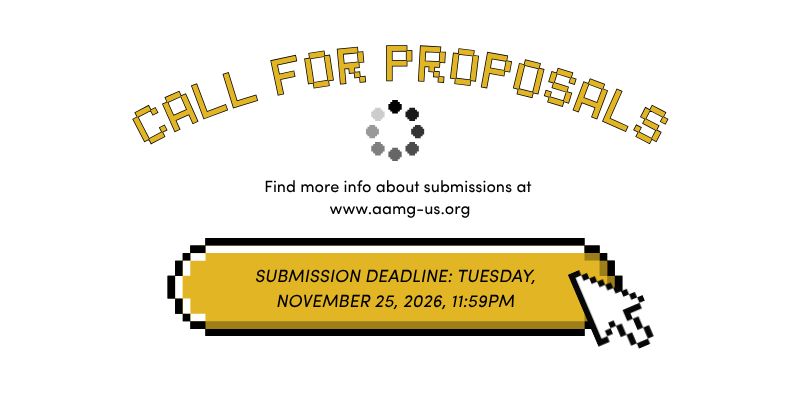
· Proposal Deadline: November 25, 2026
· Submit via: https://forms.gle/efncSFBWeUYZUhxd8
· Include: Title, Abstract (250 words max), Format, Presenter(s) Bio(s)
Have a proposal idea, but looking for more participants to fill it out? Query the AAMG listserv or social media platforms and find colleagues to connect with! Drop your note soon so that you don’t miss the deadline.
All sessions will be 45 minutes each.
Items required for all proposal types:
- Contact and institutional affiliation for all presenters including bios (up to 150 words)
- Confirm that if submission is accepted you and all speakers will register and pay for conference registration. Discount codes will be provided for speakers.
- Anyone can submit a proposal; however, if chosen to present, AAMG membership will be required in some capacity for the majority of those presenting. AAMG members may sponsor a non-member presenter that is affiliated with the topic., if a nonmember is from outside the field and is bringing helpful perspective to the topic/subject matter.
- Confirm that you will provide and manage any slides or audio/visual presentations associated with your session.
- Indicate proposal type from the list above.
- Title of your proposal (15 words)
- Description of your proposal (less than 350 words) Include why your session is innovative and relevant to the conference topic or academic museum field. Include up to three learning objectives/outcomes.
- Abstract (less than 100 words) This is what will appear in the conference schedule.
- Intended audience (Check all that apply: Leadership & Management; Conservation & Care; Collections; Marketing & Communications; Finance & Fundraising; Education & Programming; Boards & Governance; Exhibitions; Curatorial Practice
- Institutional demographics:
- Staff size
- Geographic location
- Public / private institution
- Budget
- How does your proposal fit the AAMG 2027: Technology: the Trust and the Tension theme and description? (less than 250 words)
Proposal Information & Guidelines
SESSION
Three presenters speak for ten minutes each on a focused topic, allowing time for a Q&A at the end (30 minute for presentations and 15 minutes for Q&A). Proposals must include information on all presenters. One person must serve as the chair of the session; they can be a presenter as well,or just serve as chair. Sessions are 45 minutes.
PANEL DISCUSSION
Panels have 3–4 speakers, with one panelist or convener serving as moderator. A minimum of 15 minutes should be reserved for dialogue with the attendees, following the discussion. The moderator is responsible for managing slides and timekeeping. Tell us the topic, what each panelist will contribute, and how the proposal relates to the conference theme. Panel discussions, including Q&A, will be 45 minutes (30 minutes for discussion and 15 minutes for Q&A).
FACILITATED ROUNDTABLE
We are looking for 10 facilitators to host a small group discussions around a topic. No formal presentation is necessary. These roundtables create space for attendees to converse in a semi-structured format on a topic of mutual interest. This is a great networking opportunity! We invite you to propose a topic and explain why your skills, experiences, and interests will contribute to your success as a discussion leader, particularly as this relates to the conference’s theme. As the roundtable facilitator you will offer a 15 minute overview of your topic and your personal or professional connection to it, and then facilitate a conversation with attendees. Facilitated roundtables will be capped at 25 participants.
PROBLEM SOLVING WORKSHOP
Topically focused, workshops should be centered on a real or relevant problem of practice in your organization and encourage participants to collaborate on developing questions, strategies, and ideas for implementation. Whether through presentation, group discussions, or a combination of both, participants should have some kind of take away from these sessions to try at their own institutions.
Conference Planning Checklist to Get You Started
- Seek professional development support from your institution. Registration rates will be announced soon. Presenters and volunteers will receive a discounted registration rate.
- Submit a proposal before the deadline (November 25, 2026!)


